Chatbots and Image Editing Without the Internet
For the past few years, using AI tools like ChatGPT meant constantly relying on an active internet connection. This is known as Cloud-based AI. However, as we move through 2026, the technology landscape is shifting dramatically. Tech giants are now heavily focusing on ‘On-Device AI’ or Edge AI.
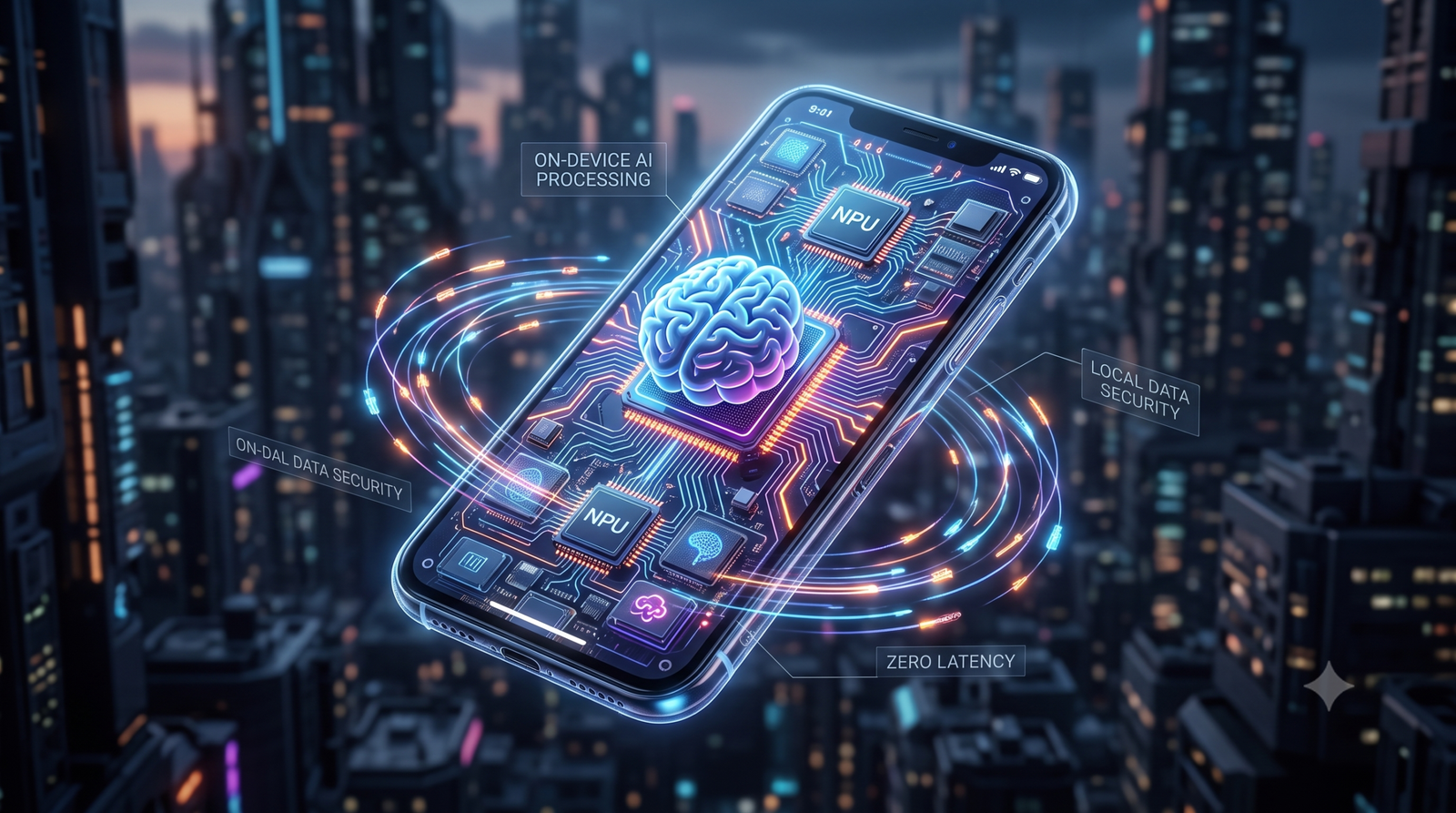
This means that the processor or NPU (Neural Processing Unit) inside your modern smartphone is now powerful enough to run large AI models locally. Without sending a single byte of data to an external server, you can edit photos instantly, issue voice commands, or summarize lengthy articles—all completely offline.
Enhanced Data Privacy and Instant Responses
Why is this technology gaining traction so rapidly? The shift is driven by two main advantages:
- Data Privacy and Security: With Cloud AI, your personal data, prompts, and photos travel through the internet to third-party servers, raising privacy concerns. On-device AI ensures all processing happens locally on your hardware, eliminating the risk of data leaks.
- Zero Latency: Waiting those few tedious seconds for a cloud server to process and send back a response is becoming a thing of the past. With local processing, AI tasks execute with lightning speed, even if your network connection is completely dead.
The Challenges of Battery and Hardware Heat
Despite the massive perks, this innovation comes with its own set of engineering hurdles. Processing massive AI workloads locally puts a heavy strain on the smartphone’s internal chipset. As a result, users frequently face issues like thermal throttling (phone overheating) and faster battery drain. Chip manufacturers are currently racing to design processors that deliver high AI computation capabilities while consuming minimal power.
Conclusion
The year 2026 marks the true foundation of On-Device AI. In the coming months, this feature will no longer be exclusive to premium flagship devices. Mid-range smartphones will soon bring offline AI capabilities straight to the hands of everyday users, permanently transforming how we interact with mobile technology.