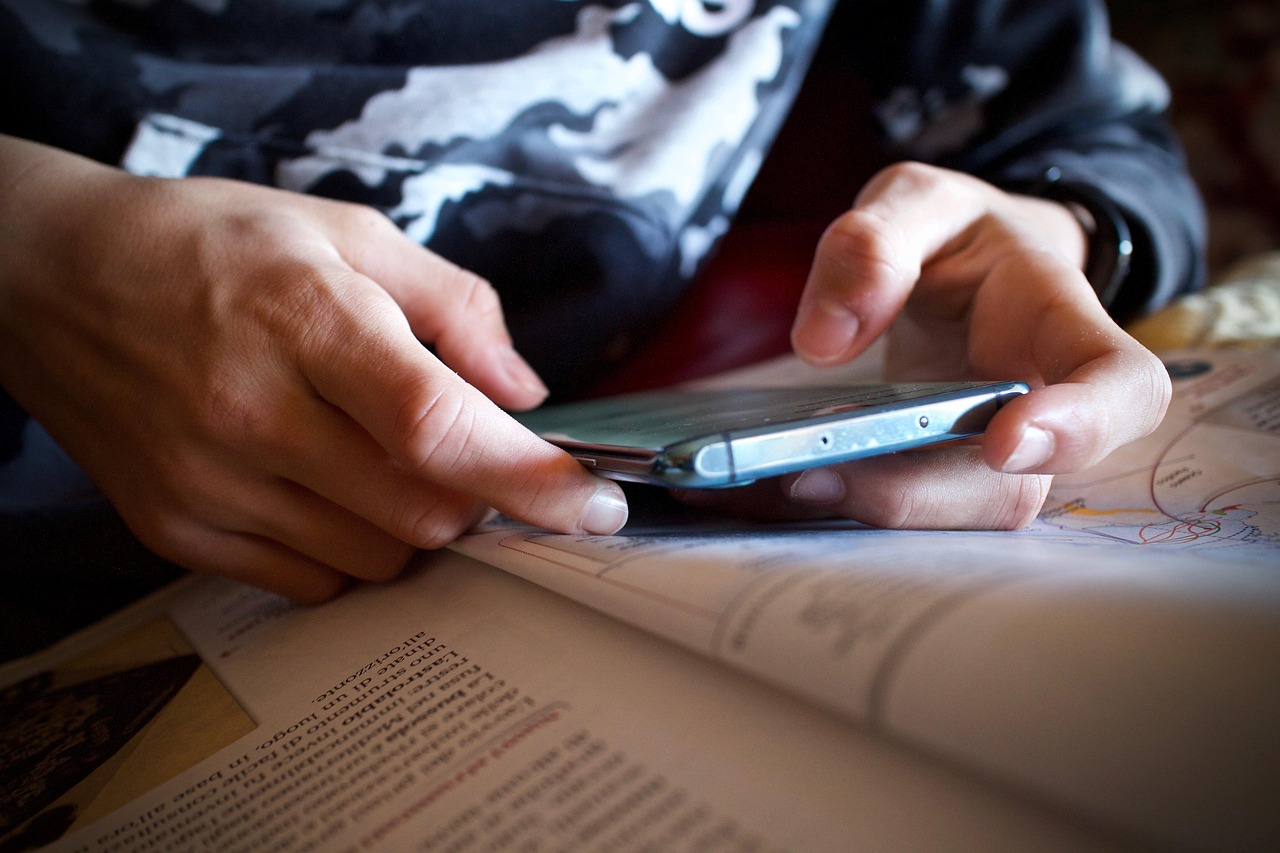
A growing number of countries and school systems are rethinking the role of smartphones and personal devices in education, with new restrictions emerging across Europe, North America and beyond. What was once seen as an essential step towards modernising classrooms is increasingly being questioned as educators, policymakers and parents raise concerns about concentration, literacy, mental wellbeing and the overall quality of learning.
Sweden is set to become one of the latest countries to tighten the rules. From the next academic year, mobile phones will be banned in schools as part of a broader effort to reduce screen exposure and encourage more traditional forms of learning. The decision reflects a notable shift in a country that was once regarded as one of the strongest advocates of digital education.
The centre-right coalition government has spent the past few years promoting books, handwriting and conventional classroom methods. Officials argue that the move comes in response to declining reading and writing skills among pupils, particularly younger children. According to Joar Forsell, chair of the Swedish parliament’s education committee, authorities have become increasingly concerned about falling literacy levels.
“We’re rolling the screens back because we believe that books and more traditional ways of learning are better for kids,” Forsell said.
The policy is not being introduced in isolation. Sweden has already invested heavily in reinforcing traditional educational materials. This year alone, the government allocated 555 million Swedish krona for textbooks and teachers’ guides, while reducing the emphasis placed on digital tools in early-years education.
In some Swedish schools, the transition is already well underway. At Malmö Borgarskola upper secondary school, students hand in their phones before lessons begin and collect them again at the end of the day. For many pupils, the arrangement has become surprisingly normal.
“When you have a phone, there’s always something to look at,” said 17-year-old student Melina Sallahi. “It’s less of a distraction.”
Her classmate, Vasilije Stjepanovic, believes the reasoning is fairly straightforward. Games, social media and messaging apps inevitably compete for students’ attention, and they tend to win. In his view, learning becomes easier when those temptations are removed from the classroom altogether.
Teachers have noticed a broader change in attitudes as well. Patrik Sander, the school’s deputy headteacher, said many educators are once again encouraging pupils to write by hand rather than relying exclusively on keyboards and screens.
“We have pushed back, learning that writing with your hands and a pencil helps you remember,” he explained.
Not everyone is convinced that moving away from screens is the right answer. Representatives of Sweden’s educational technology sector argue that digital competence will remain critical in future workplaces. Some companies also point out that specialised digital tools can provide important support for students with learning difficulties and additional educational needs.
Yet among many students, resistance appears to be less intense than some might expect. Sallahi argues that young people already spend enough time with digital devices outside school and questions whether schools need to devote additional effort to teaching skills that most pupils acquire naturally.
Sweden’s decision forms part of a much wider international movement. Over the past decade, governments around the world have introduced restrictions on mobile phone use in schools as concerns about distraction, social media dependency and declining attention spans have grown.
France introduced a nationwide ban in 2018 and strengthened the rules in 2025. China followed in 2021. Italy, which first introduced restrictions back in 2007, expanded them in 2024. Australia rolled out measures between 2023 and 2024, while Brazil and Finland introduced restrictions in 2025. South Korea and Israel are expected to implement similar policies in 2026, and the Netherlands has already established nationwide limitations.
The same debate is now playing out across the United States.
In Colorado, Denver Public Schools has approved a policy that will prohibit students from using mobile phones and other personal communication devices throughout the entire school day from the next academic year. The decision was approved unanimously by the district’s Board of Education.
The restrictions go well beyond smartphones. Smartwatches, wireless earbuds, personal tablets, laptops and other privately owned communication devices will also be covered.
The policy follows new state legislation requiring school districts to establish rules governing student device use before July. Public opinion appears divided, although not evenly. A district survey conducted among parents, staff and students found that 64 per cent supported a full-day ban. Students, however, viewed the proposal very differently: 97 per cent said they opposed it.
For many parents, the issue comes down to classroom focus. Jamie Chesser, whose daughter attends sixth grade, described phones as a constant source of disruption.
“They are extremely distracting in a classroom environment,” Chesser said. “Thinking about teachers and how incredibly difficult it must be to not only have to teach but then have to monitor cell phone or device usage in the classroom and balance that. I have to believe that that’s incredibly difficult.”
Some teachers share that perspective. Dr Maria Falcón, a special education teacher at Vista Academy, argues that an all-day ban is actually simpler than allowing students to use devices during breaks and lunch periods.
Collecting phones before every lesson and returning them afterwards, she noted, consumes valuable time and adds unnecessary administrative burdens. Keeping devices stored away from the start of the day until dismissal may ultimately reduce stress for both teachers and pupils.
At the same time, concerns about safety continue to fuel opposition. Parent Tamika Galloway said she believes families should be able to contact their children directly whenever necessary.
“There have been too many times that my kids have called me to pick them up early because of perceived threats, and they’ve always turned out to be true,” she said.
School leaders acknowledge those concerns. Denver Board of Education President Xóchitl Gaytán said the district’s superintendent will continue developing communication procedures to ensure parents receive timely information during emergencies. The district is also working on practical questions such as how devices will be stored and which exemptions should apply, including provisions for multilingual students who rely on translation technology.
Supporters nevertheless argue that the benefits extend beyond academic performance. Improved concentration, stronger social interaction, healthier relationships with adults and better mental wellbeing are frequently cited as potential advantages.
Meanwhile, discussions are expanding beyond mobile phones altogether. In neighbouring Kansas, the State Board of Education has begun examining broader questions about technology use in classrooms after Governor Laura Kelly signed legislation restricting personal devices during the school day.
While schools will still be permitted to provide educational technology, board members are increasingly focused on a more fundamental question: when does technology genuinely improve learning, and when does it merely add another layer of distraction?
“If it doesn’t deliver quality instruction, it should not be used,” said board chair Cathy Hopkins. “And if you can’t prove that it’s actually moving the needle for the kids, then what are you doing?”
Others want a more detailed discussion about age appropriateness. Board member Jim Porter questioned whether very young children should be using technology in classrooms at all, and if so, under what circumstances. Similar questions are now emerging in education systems around the world.
No decisions have yet been made in Kansas. The latest meeting was purely exploratory. Even so, the conversation illustrates how the debate has evolved. What began as a discussion about smartphones is becoming something much larger: a reassessment of how much technology schools truly need, what educational purpose it serves, and whether decades of digital expansion have always delivered the benefits that were promised.
For years, the assumption was that more technology automatically meant better education. Increasingly, policymakers, teachers and parents are no longer willing to take that for granted.